
BART Silicon Valley Phase II remains one of Santa Clara County’s largest transportation projects in 2026. Construction activity now affects several future station areas across San Jose and Santa Clara. Travelers do not have new Phase II train service yet, but current work can influence streets, parking, sidewalks, and travel planning near key parts of the corridor.
For broader county travel ideas, visit Santa Clara County California while planning local transportation and sightseeing.
What BART Silicon Valley Phase II Includes
The Santa Clara Valley Transportation Authority project page describes Phase II as a six mile extension from Berryessa and North San Jose through downtown San Jose to Santa Clara.
The project includes four future stations. These are 28th Street and Little Portugal, Downtown San Jose, Diridon, and Santa Clara. Three station platforms sit underground, while the Santa Clara station is planned at ground level.
The project also includes an approximately five mile tunnel and a new maintenance and storage facility. The official project overview provides maps and details for each station area.
Why the Project Is Especially Relevant in 2026
Phase II has moved beyond early planning into visible construction activity. The project’s August 2026 updates show active work around the West Portal and several future station areas.
The BART Silicon Valley Phase II project website publishes current notices, newsletters, construction information, and community updates. Checking that source before traveling near major work areas can help visitors understand temporary conditions.
Construction details can change frequently. A street that feels normal during one visit may have testing, utility work, fencing, or altered access during another.
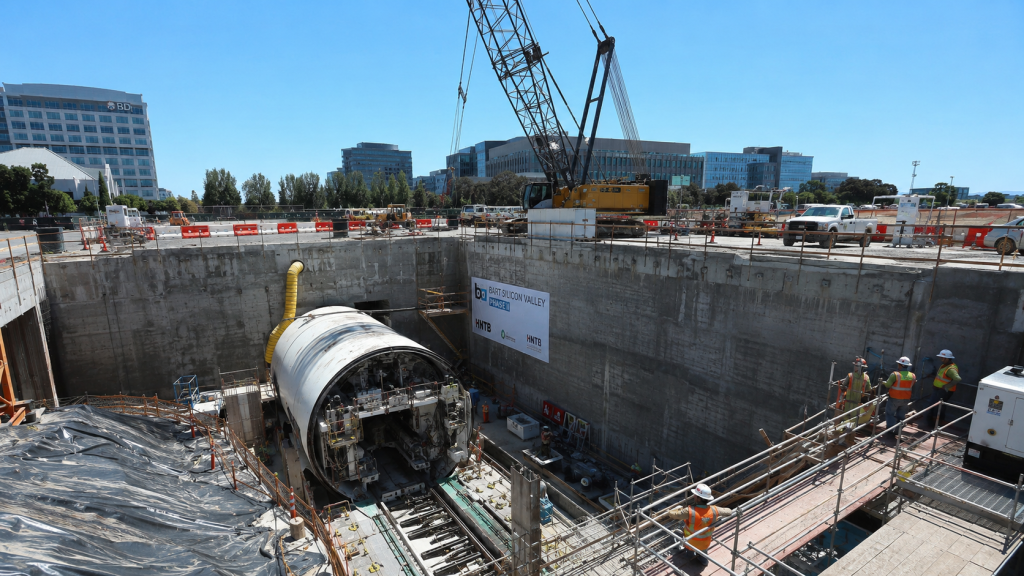
West Portal Work Is a Key Construction Focus
The West Portal near Newhall Yard serves as the launch area for the tunnel boring machine. This large work zone sits near the boundary between San Jose and Santa Clara.
The official Phase II construction page lists active and future work across the alignment. It also explains planned activity at the West Portal, future stations, and the maintenance facility.
Visitors do not need to understand every construction detail. However, knowing where major work occurs can help with route choices. This is especially useful when heading toward nearby hotels, offices, attractions, or event venues.
Future Downtown San Jose Station Access
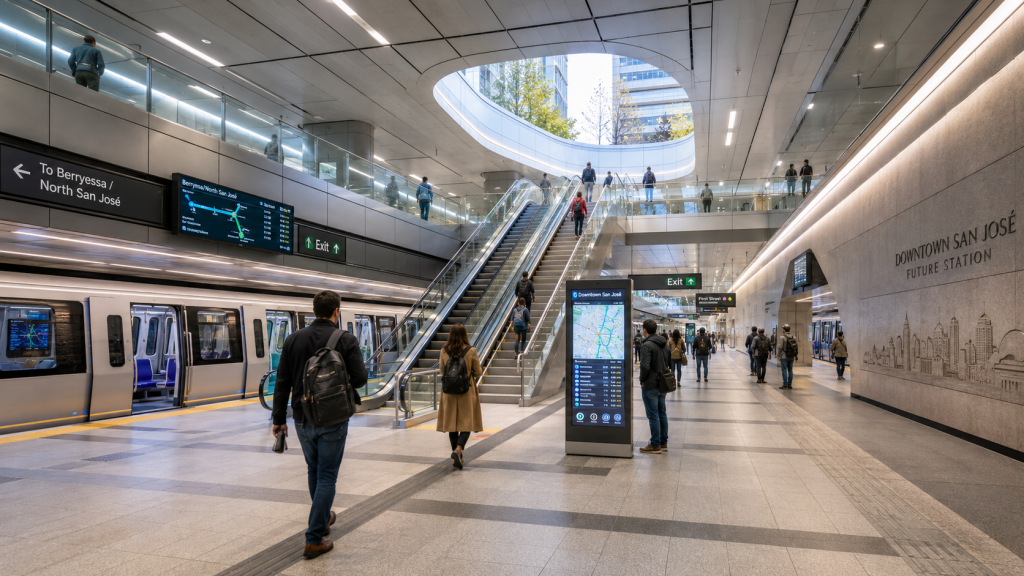
The planned Downtown San Jose station places regional rail access near the city’s central business and cultural district. Early site work in this area can include testing, demolition, utility preparation, and other construction steps.
For travelers, the future station matters because downtown San Jose already contains museums, restaurants, hotels, entertainment venues, and event spaces. BART service can eventually add another major regional transit option for this area.
For now, visitors should continue using existing VTA, Caltrain, bus, rideshare, cycling, and driving options. Construction notices can help people avoid unnecessary delays around work zones.
Diridon Is Becoming an Even Larger Transit Hub
San Jose Diridon Station already connects several transportation services. The future BART station adds another layer to a location that plays a major role in regional travel.
Caltrain’s transfer information shows connections available at San Jose Diridon, including other rail and transit services. Travelers can use these existing connections while Phase II construction continues.
The broader Diridon area is also part of long term station planning and redevelopment. That makes travel planning important for people attending events, commuting, or visiting nearby destinations.
The Future Santa Clara Station Adds Another Regional Connection
The Santa Clara station is planned as the western end of the Phase II extension. Its location can improve future access between BART and other transportation networks.
Santa Clara already attracts visitors for major sports, concerts, conventions, technology businesses, shopping, and family attractions. Regional rail expansion can change how future visitors approach trips to this part of the county.
Until service begins, visitors should use existing options and check local transit schedules. The VTA website provides current bus and light rail information for Santa Clara County.
Construction Can Affect More Than Drivers
Large infrastructure work can change walking routes, bike access, parking areas, bus stops, and loading zones. Pedestrians may see temporary fencing or detours near active sites.
Cyclists should follow posted signs and avoid entering closed work areas. Drivers should expect possible lane shifts or temporary restrictions. Transit riders should review service notices before traveling.
Allowing extra time is a simple way to reduce stress. This is especially useful when traveling to a scheduled event, train connection, appointment, or airport transfer.
How Visitors Can Check Current Conditions
Start with the official project website before traveling near a Phase II construction area. The site includes monthly construction updates and location specific notices.
Next, check your transit operator. VTA provides local bus and light rail information. Caltrain provides rail schedules and transfer details. BART provides current regional system information for stations already in service.
Navigation apps can help with traffic, but official construction notices provide context that a map app may not explain. Use both when conditions look complicated.
What the Extension Could Mean for Local Exploration
Phase II can eventually make several Santa Clara County destinations easier to reach without a car. Downtown San Jose is a major example because many attractions cluster within a walkable core.
The Little Portugal area can gain a direct regional rail connection. Diridon can connect BART with an already important transit hub. Santa Clara can gain another way to connect with the wider Bay Area.
These changes may support more car light day trips. Visitors could arrive by rail, walk to attractions, use local transit, and continue to another city without moving a vehicle.
Plan Extra Time for Airport and Event Connections
Several Phase II work areas sit near busy transportation and activity corridors. Visitors may be moving between downtown hotels, San Jose Mineta International Airport, convention spaces, sports venues, and rail stations.
A construction delay that seems small can matter when a trip includes a timed connection. Build a buffer into airport transfers, ticketed events, and train departures. This is more useful than relying on the shortest travel estimate.
Visitors staying in San Jose or Santa Clara should also ask hotels about current pickup zones. Rideshare and shuttle access can shift when nearby streets have temporary work.
Support Local Businesses Near Construction Areas
Major construction can change foot traffic and vehicle access around local businesses. Restaurants, cafes, shops, and services near station sites may remain open even when fencing or road work is visible.
Look for posted pedestrian routes and business access signs. A little planning can help visitors reach local destinations without assuming an active work zone means an entire block is closed.
Travel Planning During the Construction Years
The extension remains a long term project, so construction conditions can evolve over many years. Travelers should focus on current information rather than old maps or outdated notices.
Check the date on any construction advisory. Review official pages shortly before a trip. Give yourself extra time when traveling near active work zones.
BART Silicon Valley Phase II 2026 is important even before trains begin running. The project is reshaping transportation planning around San Jose and Santa Clara. Staying informed can help residents and visitors navigate current construction while understanding the county’s future transit network.